
Enabling Circular Water Management at Urban and Regional Scale
The Water Symbiotic Flows pilot demonstrates approaches for managing urban water and wastewater flows, as circular urban resources. The pilot integrates decentralised and centralised solutions to recover water, nutrients, and energy, supporting climate resilience and long-term sustainability in urban and peri-urban environments.
The problem
Urban water systems across Europe are under growing pressure from climate change, population density, and competing demands for freshwater. Traditional linear water management models treat wastewater and sewage sludge primarily as liabilities, resulting in high resource losses, increased energy consumption, and environmental stress.
Even in regions with well-developed water infrastructure, cities face recurring challenges related to water scarcity, flood risks, and the rising cost and energy intensity of water treatment. Opportunities to recover treated water, nutrients, and energy remain largely underexploited, limiting the transition toward more resilient and circular water systems.
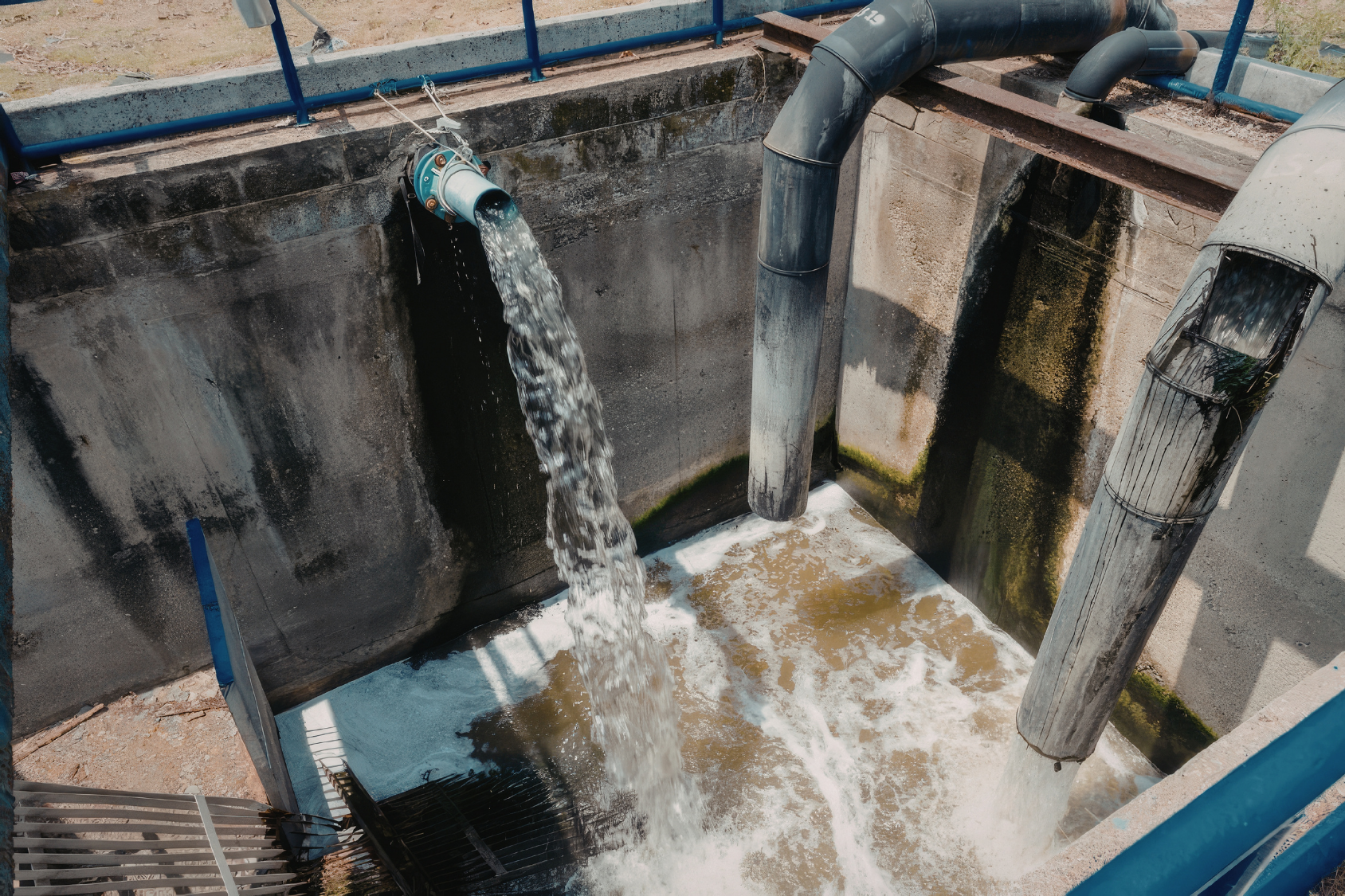
These challenges are particularly acute in water-stressed regions. In Attica, Greece, climate change is intensifying heatwaves and water scarcity during summer months, placing increasing pressure on freshwater resources. Current systems rely heavily on potable water for irrigation and other non-potable uses, while wastewater treatment remains energy-intensive and largely centralised.
Additional barriers include:
- Infrastructure limitations: Integrating decentralised water treatment at the point of demand faces technical, financial, and regulatory challenges, despite its potential to reduce system-wide energy use and losses.
- Wasteful by-products: Sewage sludge management is costly and complex. Drying and incineration involve high capital and operational costs, while land application is difficult in dense urban contexts.
- Safety concerns: Reuse of treated wastewater for agriculture requires strict control of pathogens and emerging contaminants, in line with the EU Water Reuse Regulation (EU) 2020/741.
As a result, valuable water, nutrients, and energy are lost, while cities face rising water scarcity risks, higher treatment costs, and reduced adaptive capacity to climate impacts.
What THESEUS is doing
THESEUS is implementing a comprehensive set of solutions, bridging the gap between urban water management and circular agriculture.
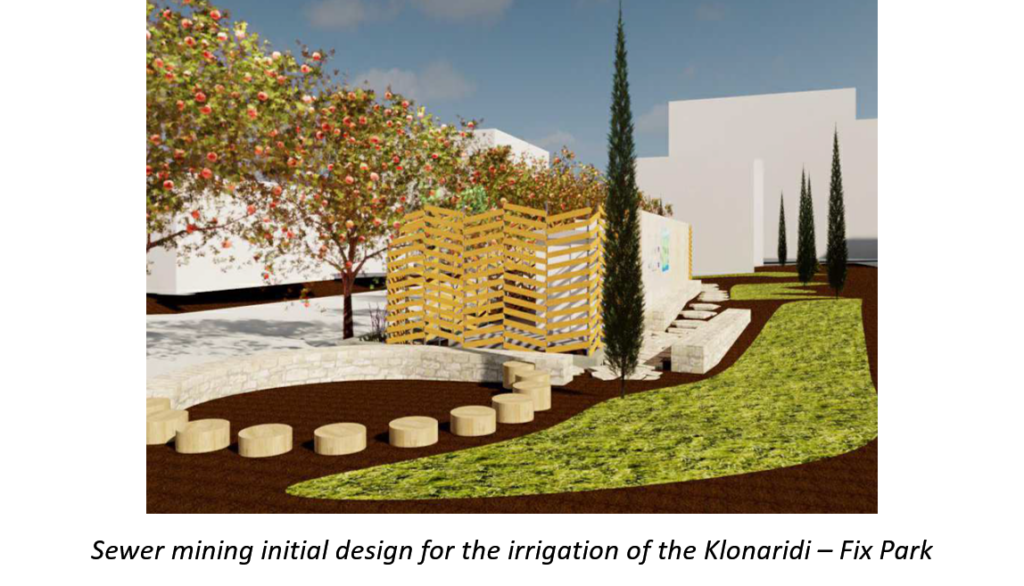
- Decentralised sewer mining: Sewer mining units based on membrane bioreactor technology abstract wastewater directly from local sewers, treat it on-site, and reuse it for irrigating urban green spaces, including parks in Attica (Klonaridi – Fix Park). This reduces freshwater demand and helps mitigate urban heat stress.
- Rainwater harvesting and urban green spaces: Rainwater harvesting systems are implemented at the 21st Primary School of Athens as a first application, where collected rainwater is used to irrigate rooftop and yard green spaces. In parallel small-scale composting units treat biowaste and produce compost applied within the on-site green areas, with similar systems planned for additional residences and an educational building.
- Nature-based Solutions (NbS): Urban parks are redesigned using solutions such as rain gardens and bioswales (in the KAPAPS park of Athens) to harvest and manage rainwater and stormwater. These interventions reduce flood risks while providing alternative water sources for urban and industrial uses.
- Centralised reclaimed water: In Eastern Attica, the project assesses the reuse of treated wastewater from a WWTP (Koropi-Peania) for agricultural irrigation. The activities focus on evaluating the fate and potential accumulation of emerging contaminants in reclaimed water, soil and crops, as well as the effects of reclaimed water on crop development and soil health, feeding into the development of a Risk Management Plan in line with the EU Water Reuse Regulation 2020/741.
- Sludge valorisation via pyrolysis: Sewage sludge from major wastewater treatment plants, at Psyttalia, is treated using fast pyrolysis and torrefaction. These processes convert sludge into bio-oil, gas, and biochar, transforming a disposal challenge into an energy and material resource.
All solutions are implemented in real urban and peri-urban environments through a mix of new pilot installations and actions linked to existing water and wastewater systems
The pilot applies a systemic approach that integrates water reuse, risk-based safety validation, and high-value resource recovery within urban and regional water systems.
- Beyond disposal: Instead of focusing on sludge drying or incineration, the pilot applies advanced thermal processes to recover energy carriers and biochar, creating new circular value chains from wastewater residues.
- Risk-based safety validation: The pilot conducts detailed risk assessments for emerging contaminants, including pharmaceuticals and personal care products, in crops irrigated with reclaimed water. This supports compliance with EU Regulation 2020/741 and builds confidence for agricultural uptake.
- System-level planning: Rather than isolated demonstrations, the pilot feeds into a co-developed Strategic Regional Master Plan for Circularity. This plan incorporates system design, pricing models, and governance considerations, enabling future investments by the Region of Attica.
Expected outcomes and impact
The pilot aims to establish a blueprint for reducing freshwater consumption and closing the loop on wastewater solids.
- Quantitative targets: The goal is to reduce freshwater consumption for urban green irrigation by 50%.
- Flood mitigation impacts: Nature-based solutions are expected to reduce rainfall runoff volumes by approximately 15% and peak discharge by up to 40%, significantly lowering flood risks in intervention areas.
- Policy and investment uptake: The ultimate output is the adoption of the Strategic Master Plan by local authorities, enabling future investments in circular water systems across the wider Attica region.