
THESEUS H4C engages young citizens in co-designing greener school environments in Athens
On 4 December 2025, THESEUS Hub4Circularity took part in a Co-Design Workshop on Sustainable Educational Spaces with Nature-Based Solutions (NBS) at the 21st Primary School of Athens “Lela Karagianni”, demonstrating how circular and nature-based approaches can be embedded in everyday urban environments through education and community engagement.
The workshop was organised through a collaboration between the European programmes THESEUS Hub4Circularity, ASCEND, and MI-TRAP, and coordinated by Politecnico di Milano, in close cooperation with the Municipality of Athens, NCSR “DEMOKRITOS”, and the National Technical University of Athens. The initiative was supported by the Deputy Mayor for Climate Governance and Social Economy, Mr. Nikos Chrysogelos, and brought together pupils, teachers, parents, researchers, and municipal representatives.
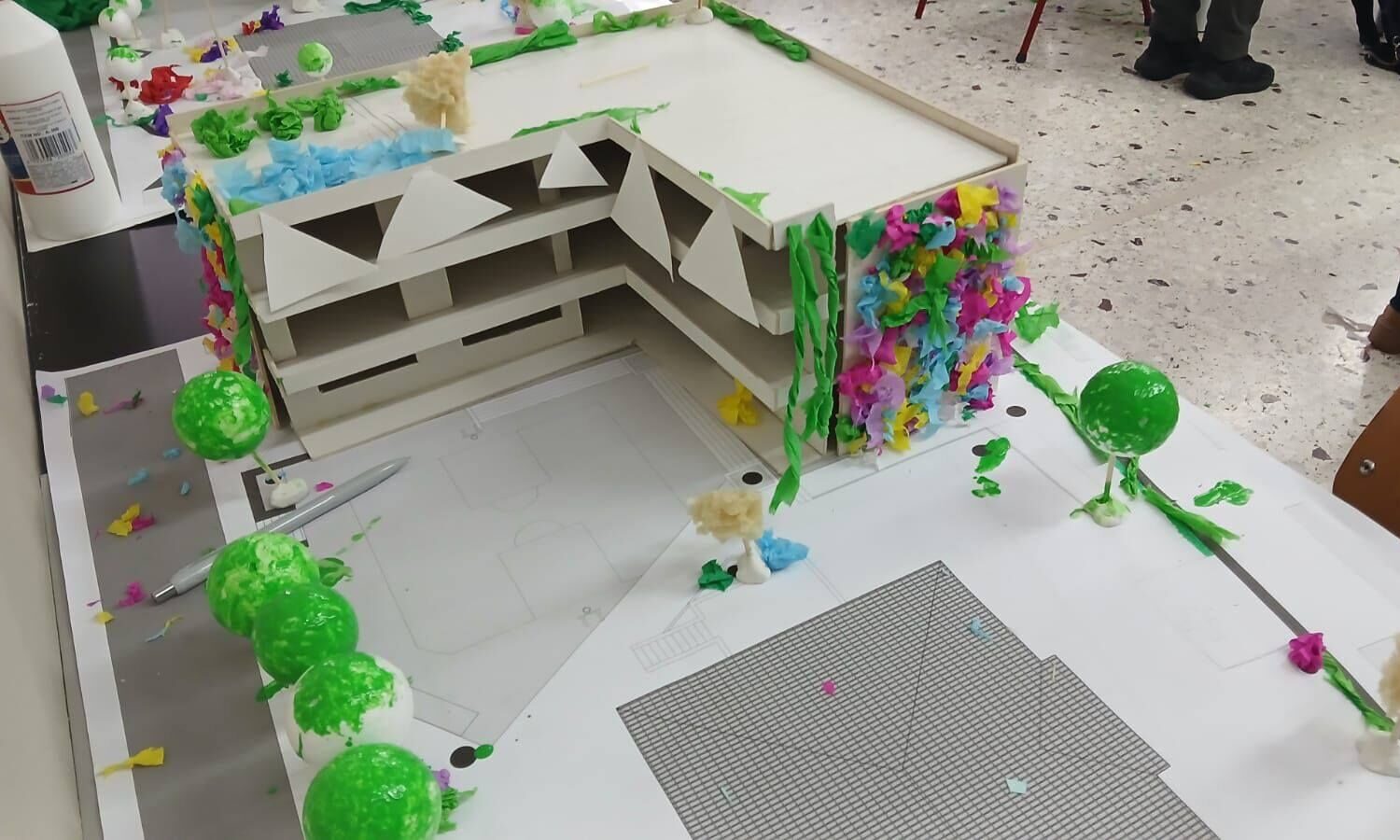
Through hands-on co-design activities, students were invited to rethink their schoolyard and surrounding neighbourhood using nature-based solutions. Working with experts, the pupils developed drawings and physical models proposing interventions such as green roofs and roof gardens, vegetable and aromatic gardens, shaded outdoor areas, rainwater harvesting systems for irrigation, and the integration of existing photovoltaic installations into everyday school life.
Beyond design ideas, the workshop helped students understand the impacts of air pollution in urban areas and how nature-based solutions can contribute to healthier, more resilient cities. The process fostered creativity, teamwork, and environmental awareness, empowering pupils to see themselves as active contributors to climate-positive urban transformation.
For THESEUS, the workshop highlighted the value of co-design and citizen engagement in translating circular and sustainability principles into tangible, place-based solutions. By linking schools, municipalities, universities, and research organisations, the initiative demonstrated how urban living labs can activate local communities and support broader climate neutrality and circularity goals.