

THESEUS H4C presents digital pathways for regional circularity, MFA projections and Digital Product Passports
THESEUS H4C hosted a dedicated session within the Hubs4Circularity Community of Practice Webinar on “Regional Matchmaking, MFA & DPP for sophisticated waste valorization and upcycling: Approaches and EU Project Experience from THESEUS.”
The webinar brought together participants interested in circular economy, waste valorization, upcycling, industrial-urban symbiosis and digital tools for regional transformation. The session was delivered by Charalampos K. Manousiadis and Lucyna Lekawska-Andrinopoulou from I-SENSEGroup/ICCS, who presented how THESEUS is developing practical digital pathways to support circular planning and industrial-urban symbiosis in the Attica region.
A central message of the webinar was that circularity is not only about identifying available waste streams. It also requires a deeper understanding of the regional context in which those streams exist, including the territory, infrastructure, policy landscape, actors, material needs and opportunities for collaboration.
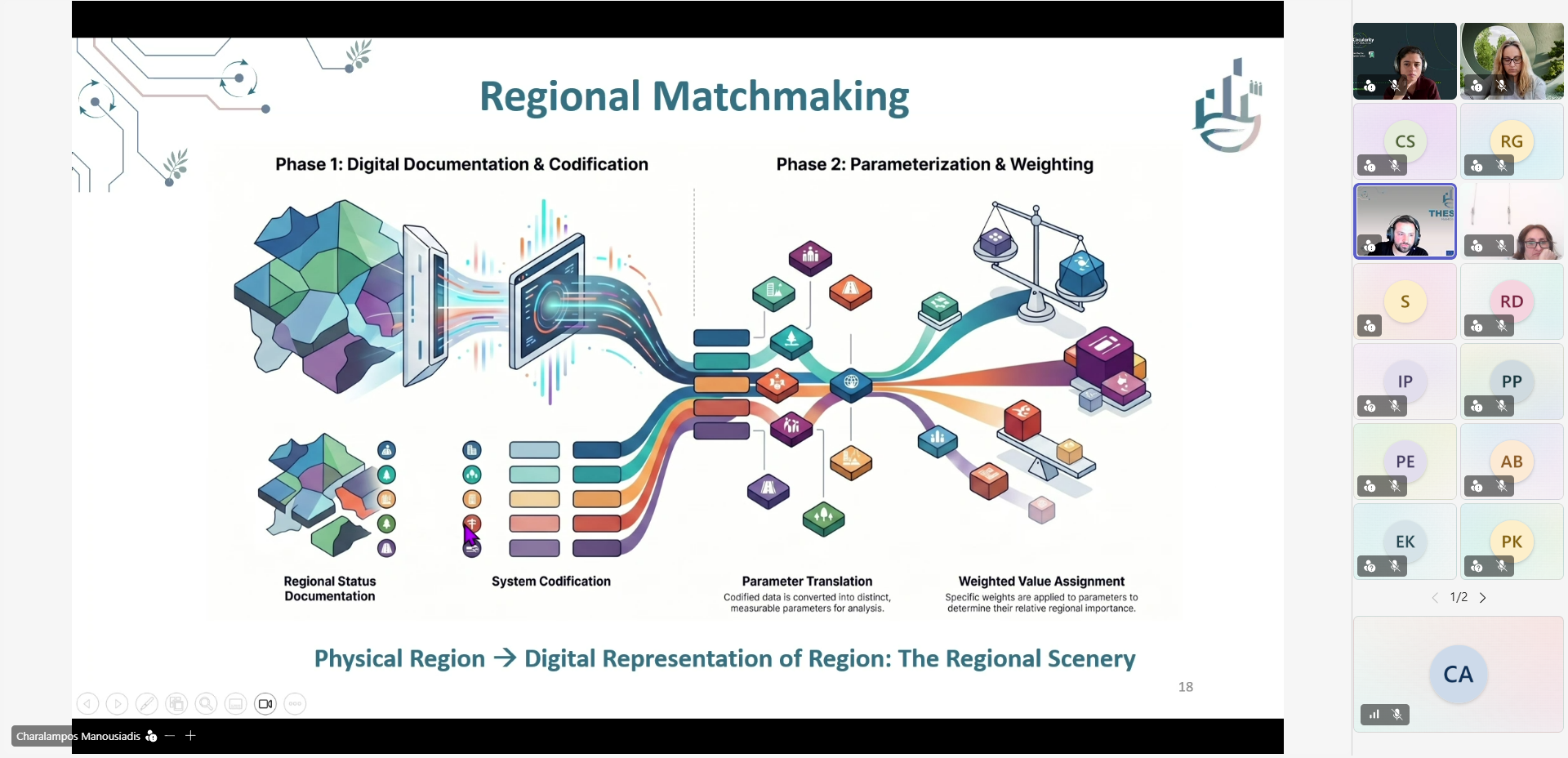
The first part of the session focused on Regional Matchmaking and how physical regional realities can be translated into structured digital representations. This approach supports the identification of symbiotic opportunities between actors, sectors and value chains, helping regions move from fragmented resource information to more coordinated circular action.
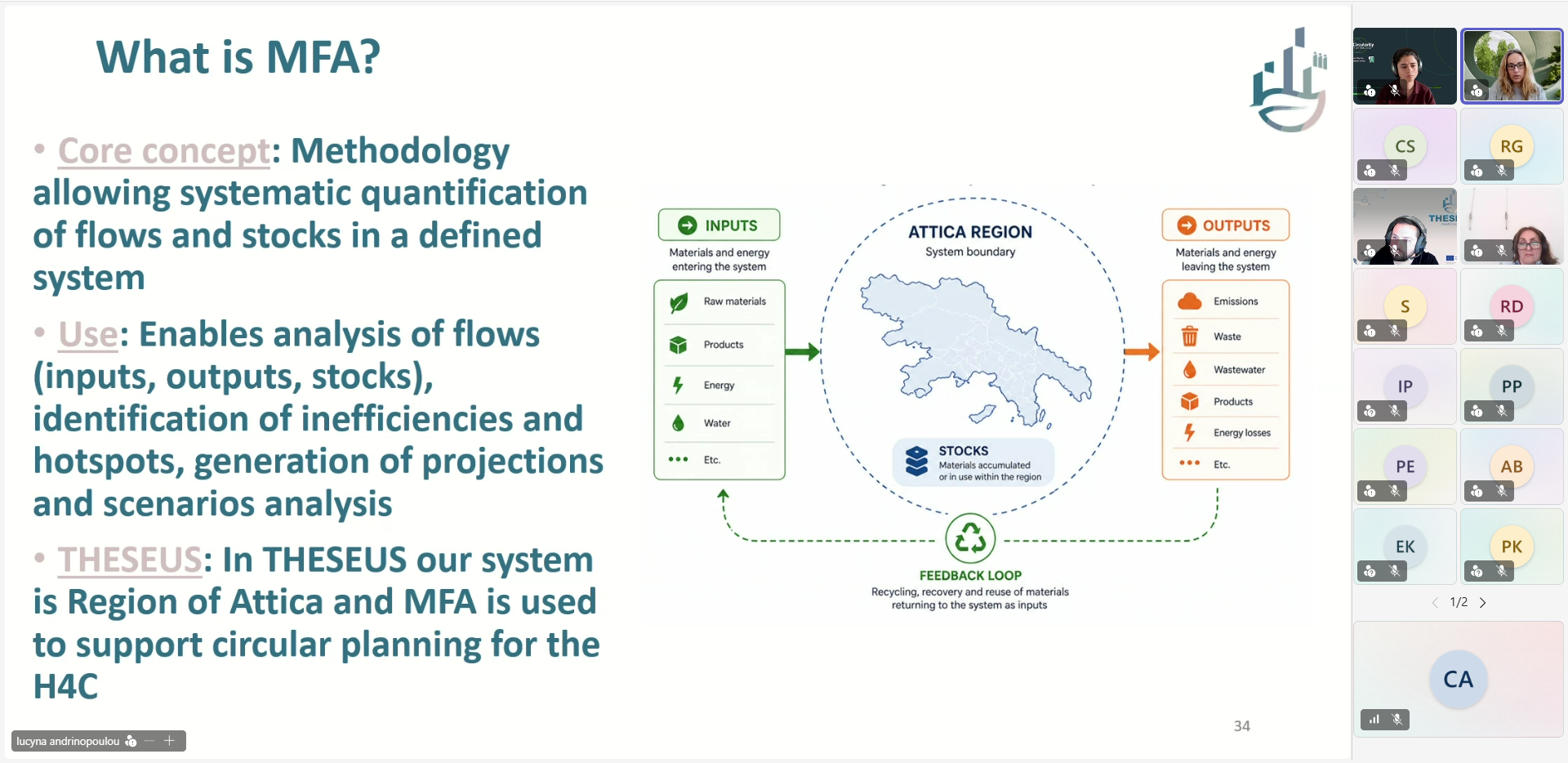
The second part explored the role of Material Flow Analysis (MFA) and MFA-based projections in circular planning. MFA enables regions to map inputs, outputs, stocks, inefficiencies and hotspots, while supporting scenario development and longer-term projections for circular economy pathways. In the THESEUS context, this is particularly relevant for understanding how material flows in Attica may evolve over time and how policy, infrastructure and investment decisions can be better aligned.
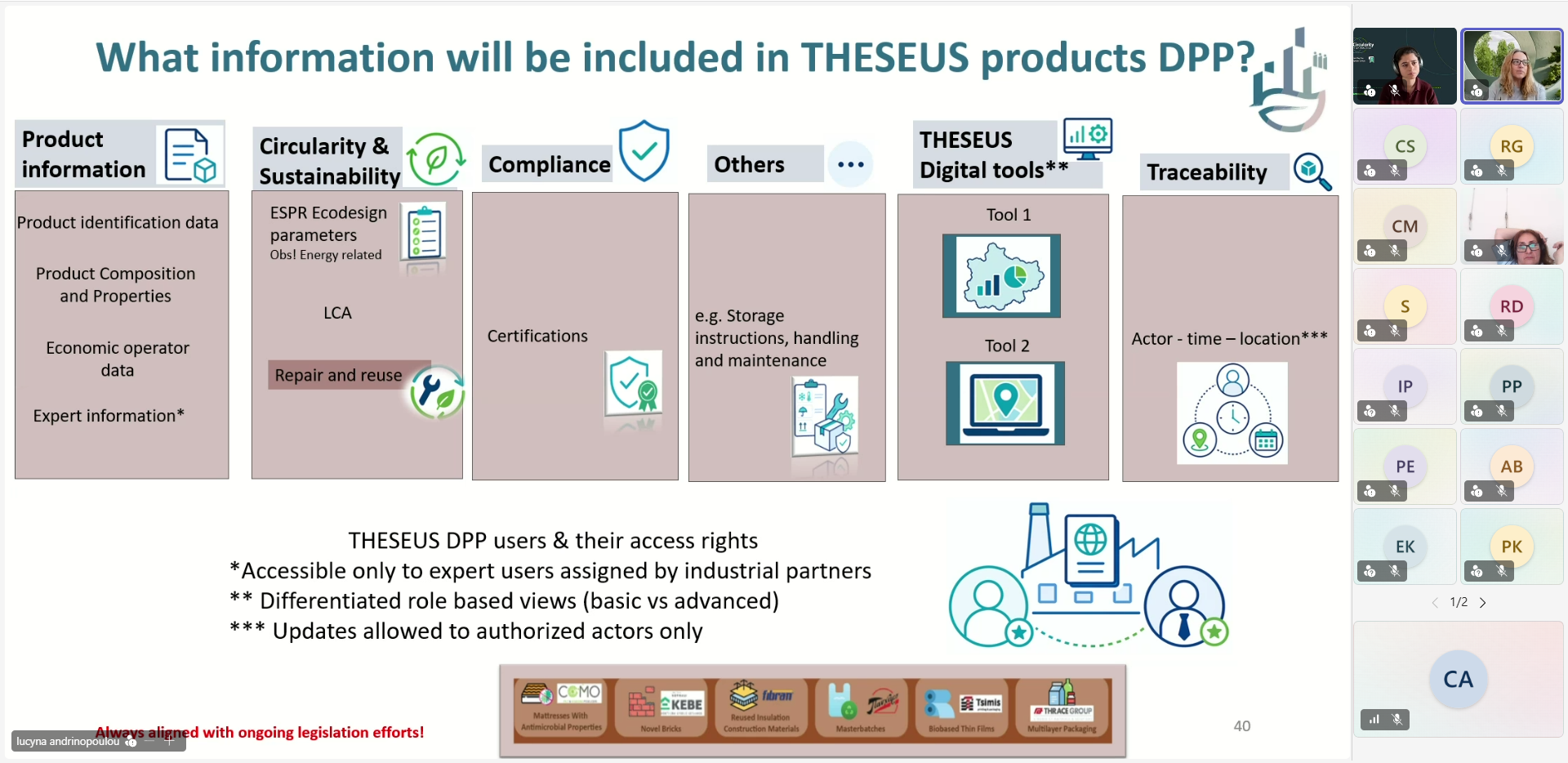
The webinar also highlighted the importance of Digital Product Passports (DPPs) as tools for product-level traceability. DPPs can provide information on material composition, compliance, repair, reuse, lifecycle data and traceability across value chains, supporting improved sorting, upcycling and high-value material recovery.
A key takeaway from the session was the added value of combining these three elements:
DPPs provide product-level information. MFA and projections generate regional context and future-oriented insights. Matchmaking enables action by connecting actors, resources and opportunities.
Through this integrated framework, THESEUS aims to support better regional matching, stronger policy alignment, improved investment decisions and more effective pathways for reuse, repair and high-value material recovery.
THESEUS H4C warmly thanks the Hubs4Circularity Community of Practice for hosting the exchange, as well as all participants for their interest, questions and contributions.