

Upcycling Municipal Waste into Circular Packaging Solutions
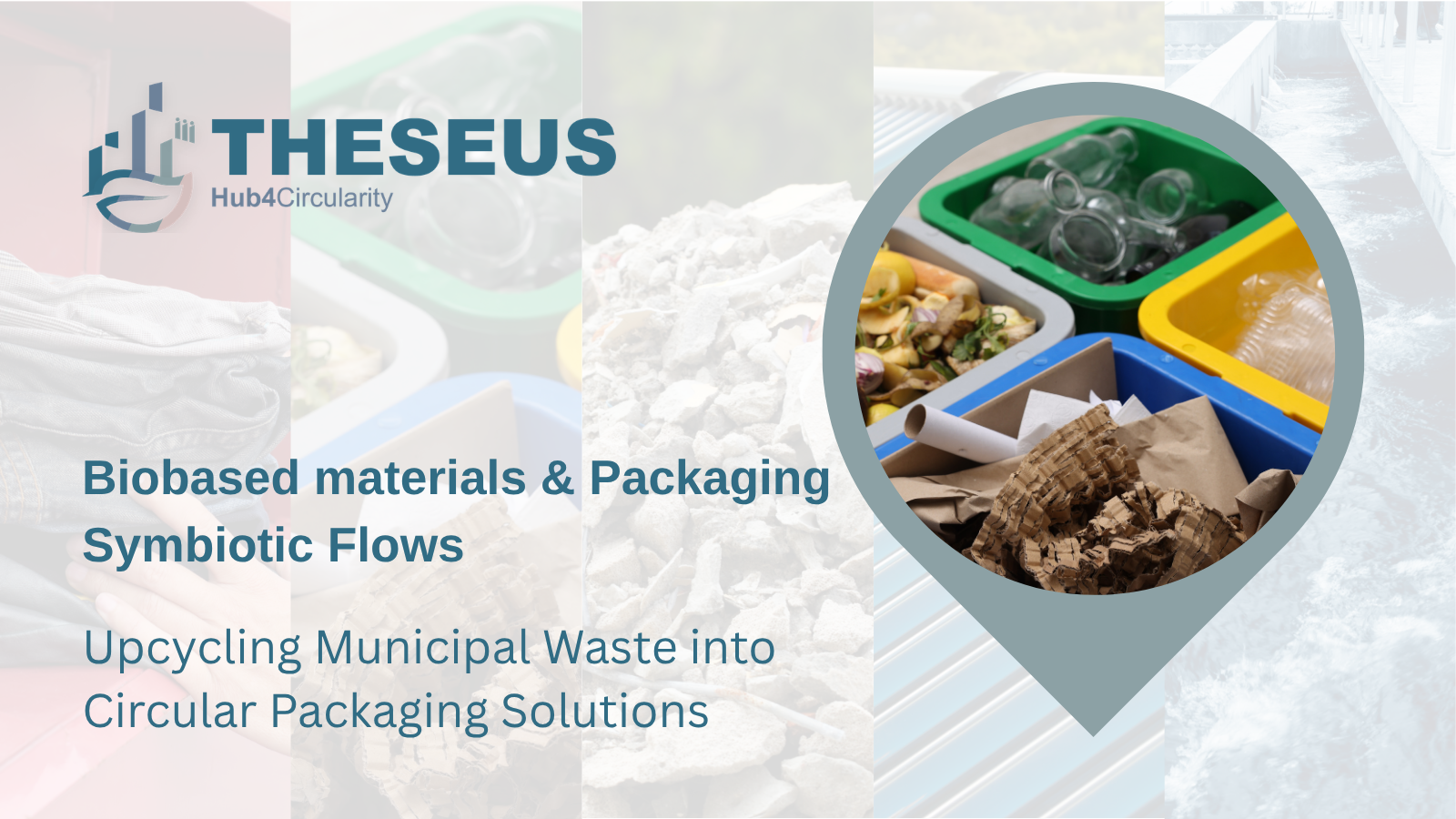
The Biobased Materials and Packaging Symbiotic Flows pilot focuses on one of the most critical urban material streams: mixed municipal and packaging waste. The pilot addresses the structural inefficiencies of current recycling systems by transforming contaminated urban waste into high-quality, circular packaging materials with recycled content through advanced sorting, material innovation, and industrial validation.
The problem
Urban and municipal waste, particularly packaging waste, is one of the most persistent challenges facing European cities. Although dedicated recycling systems exist, mixed and complex waste streams remain difficult to process due to contamination and material heterogeneity, limiting the effectiveness of conventional sorting technologies.
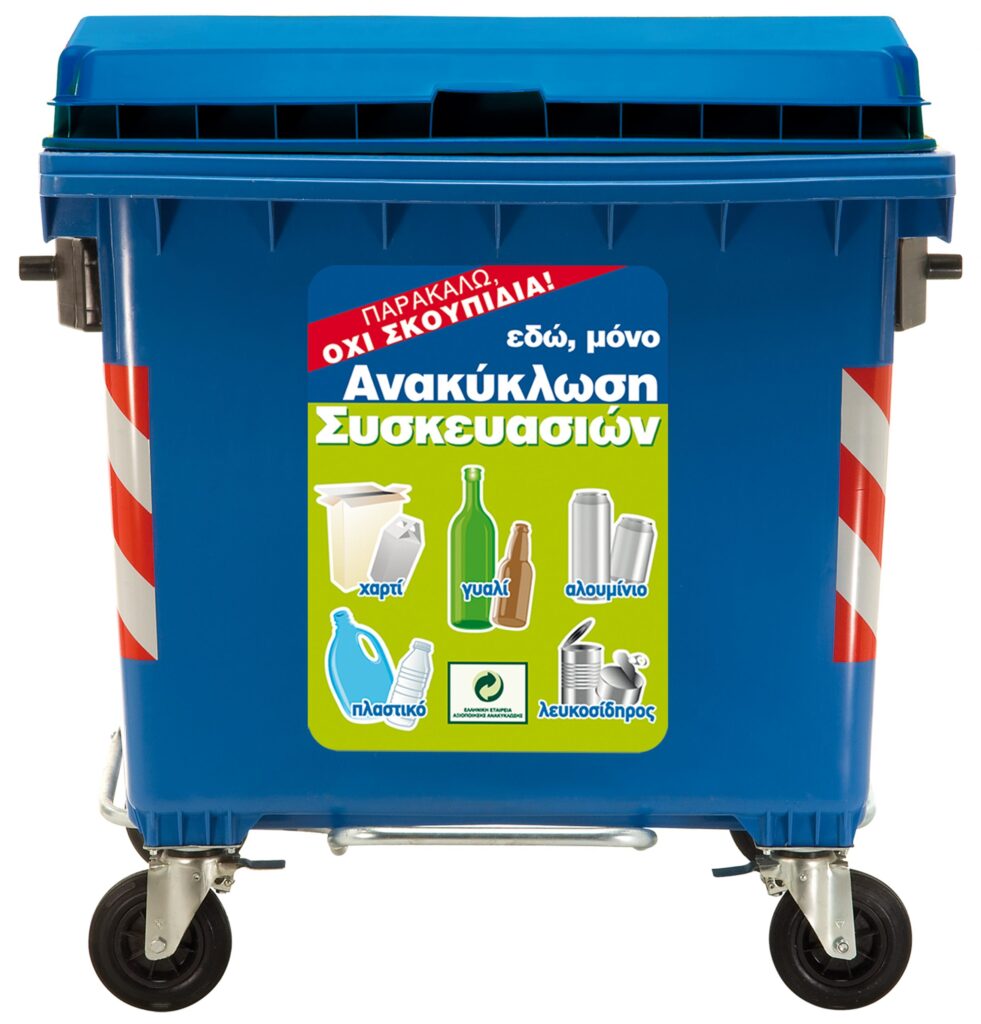
These challenges are especially visible in contexts where mixed collection systems dominate. In Greece, packaging waste is mainly collected through municipal recycling streams known as “Blue Bins”. In practice, however, these streams suffer from high contamination rates and limited separation capacity, resulting in low-quality recovered materials.
Typical municipal recycling streams contain a heterogeneous mix of paper (~28.5%), biowaste (~39.2%), plastics (~12%), glass, and textiles. This complexity makes it difficult to isolate clean material fractions suitable for high value recycling. Plastic waste adds another layer of difficulty, as conventional systems struggle to distinguish between different polymer types, including petroleum-based plastics, bioplastics, and composite materials. As a result, global plastic recycling rates remain extremely low.
Biodegradable polymers such as PLA and PHA, increasingly used in packaging and carrier bags, face additional barriers. They are costly, lack dedicated recycling streams, and are often mixed with food residues or paper waste, preventing effective recovery.
Overall, the mixed nature of urban packaging waste leads to low purity recyclates, higher processing costs, and significant material losses. Despite their potential to become valuable secondary raw materials for local industries, these waste streams remain largely locked into linear disposal pathways.
What THESEUS is doing
THESEUS is upgrading Geocycle’s recycling facility in Attica to move beyond conventional waste sorting and enable the production of advanced circular packaging materials.
- Advanced sorting: The pilot integrates multi-sensor vision classifiers combining RGB and hyperspectral imaging with Delta robots equipped with pneumatic suction grippers. Deep learning algorithms allow the system to identify and extract specific plastics (PET, PE, bio-based polymers) as well as textiles from mixed municipal waste streams.
- Material innovation – three product streams:
- Biobased thin films: Bioplastics extracted from food waste such as fruit peels are used to develop new thin films for packaging applications.
- Multilayer packaging via electrospinning: An electrospinning process and extruder line are combined to produce nanofibre coatings enhanced with active compounds, including antimicrobial or antioxidant agents. These coatings are applied to conventional films to improve functionality and extend shelf life.
- Biodegradable polymer masterbatches: The pilot develops tailored thermoplastic polymer masterbatch formulations by combining i) recycled biodegradable polymers with ii) “fresh” polymer of the same type, or a different in nature thermoplastic biodegradable polymer, achieving a polymer blend with tailored morphology, and iii) low-cost nano-additives such as calcium carbonate or zinc oxide that can act as nucleating agents endowing melt induced crystallisation. The resulting pellets are designed to be mechanically stronger and more cost-effective than existing biodegradable alternatives.
Instead of isolated material trials, the pilot applies AI-driven material optimisation within an industrial symbiosis framework, coordinating sorting, formulation, and industrial production.
- AI-planned recipes: Unlike traditional trial-and-error, the development of biobased thin films utilizes an AI Planner (Bayesian Optimizer). This software learns from development cycles to autonomously design new material recipes based on specific performance goals.
- Cost & performance targets: The project targets a >50% cost reduction for “new” circular compounds with at least 30% recycled content, and >25% increase in tensile strength, puncture and tear resistance, of the final melt-blown films. It aims thus to make biodegradable plastics not just “green”, but economically competitive and durable.
- Symbiotic feedstock integration: This pilot acts as a feeder for others. Textiles found in the Blue Bins during this sorting process are separated and sent to the Textiles Pilot for fiber recycling, ensuring nothing is wasted.
- Smart bin optimization: THESEUS is using AI to analyze waste flows in West Attica to determine the optimal placement of Smart Bins, aiming to improve the purity of the waste collected at the source.
Expected outcomes and impact
The pilot aims to move from sorting waste to producing industrial-grade raw materials for the packaging industry.
- Industrial testing: The pilot’s outputs will be validated through industrial-scale testing across all material streams.
- Biodegradable polymer masterbatches (pellets) will be tested by industrial partners (PanChart) for the production of supermarket bags and flexible packaging, assessing printability, mechanical performance, and thermal stability.
- Thin films and biobased films developed within the pilot will be evaluated by packaging end users (TSIMIS and THRACE POLYFILMS) to assess processability, functionality, and suitability for real packaging applications.
- Efficiency targets: The goal is to increase the upcycling rate of materials at the Geocycle facility from the current 50% to 70%, diverting over 16,000 tonnes per year from landfills.
- Market viability: The long-term objective is to validate “recycled & recyclable” biodegradable films that can replace virgin plastics in the supply chain, supported by the new sorting infrastructure.